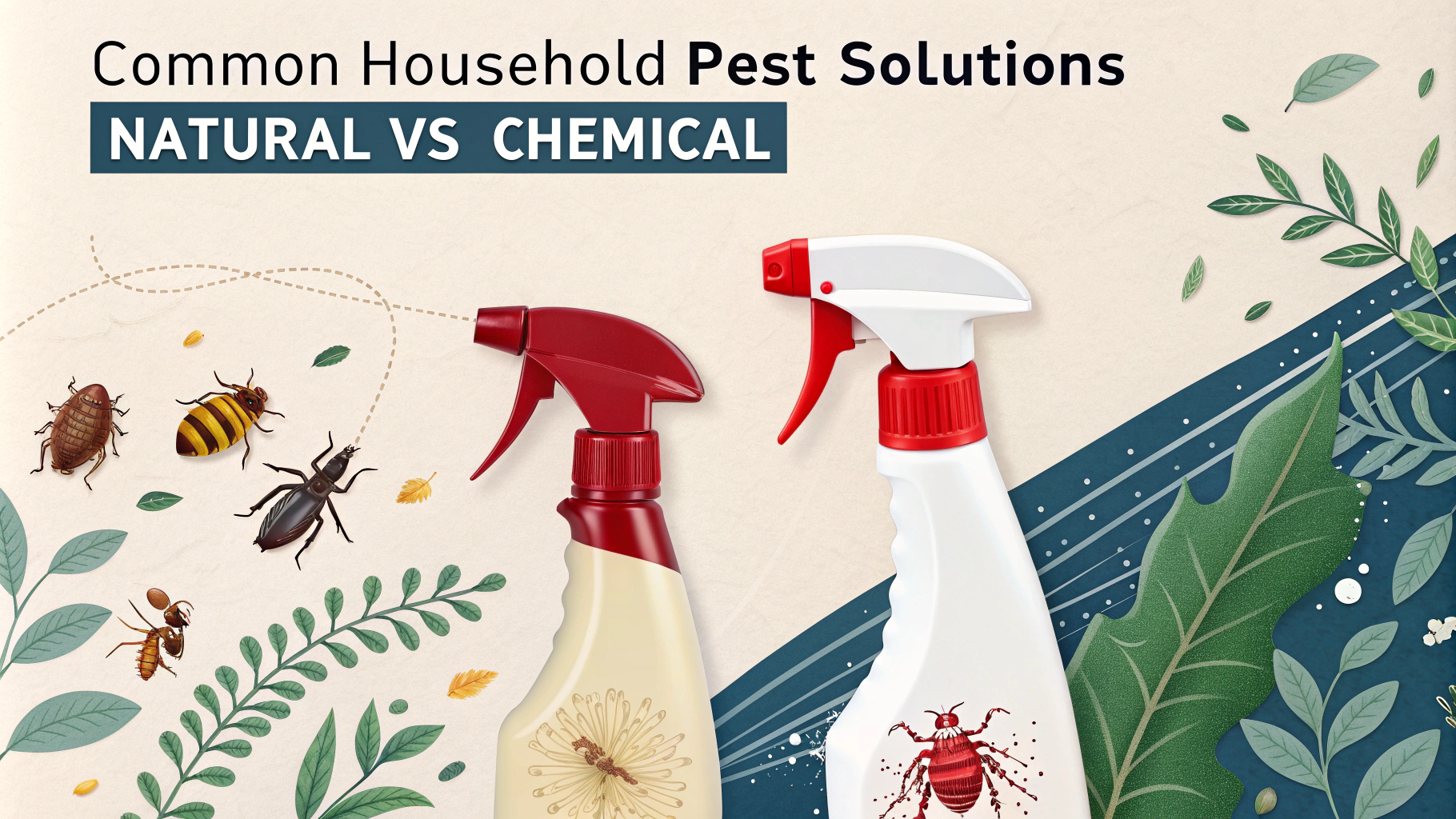
Common Household Pest Solutions: Natural vs. Chemical
Choosing between natural and chemical solutions for household pests requires understanding the benefits and drawbacks of each approach. Natural Pest C
Common Household Pest Solutions: Natural vs. Chemical

December 18, 2024
Choosing between natural and chemical solutions for household pests requires understanding the benefits and drawbacks of each approach.
Natural Pest Control Methods
Essential oils like peppermint, citrus, and lavender naturally repel many common household pests.
- Diatomaceous earth sprinkled along baseboards dehydrates crawling insects
- Vinegar solutions (1:1 with water) deter ants and spiders
- Bay leaves in pantries keep moths and weevils away
- Borax mixed with sugar creates an effective ant bait
Chemical Pest Control Options
Store-bought pesticides offer quick results but require careful handling and safety precautions.
- Pyrethroid-based sprays for immediate insect control
- Boric acid powder for cockroach infestations
- IGR (Insect Growth Regulators) for long-term prevention
- Gel baits for targeted pest elimination
Safety Considerations
Natural Solutions
Chemical Solutions
Pet and child safe
Require careful storage
No toxic residue
May need ventilation
Gentler application
Wear protective gear
Effectiveness Comparison
Natural methods typically work best for prevention and minor infestations, while chemical solutions handle severe pest problems more effectively.
When to Call Professionals
- Large-scale infestations
- Persistent pest problems
- Health-threatening pests (bed bugs, termites)
- When DIY methods fail after 2-3 weeks
Contact the National Pesticide Information Center (1-800-858-7378) for guidance on safe pesticide use.
Prevention Tips
- Seal entry points around windows and doors
- Store food in airtight containers
- Fix leaky pipes and reduce moisture
- Keep kitchen counters and floors clean
- Remove standing water from yard
For emergency pesticide exposure, contact Poison Control immediately at 1-800-222-1222.
Cost Analysis
Understanding the financial implications of both natural and chemical pest control helps make an informed decision.
Natural Solutions
Chemical Solutions
Lower initial cost
Higher upfront investment
May need frequent reapplication
Longer-lasting effects
DIY-friendly options
Professional application costs
Environmental Impact
Consider the broader environmental effects when choosing pest control methods.
- Natural solutions have minimal ecosystem impact
- Chemical pesticides may affect beneficial insects
- Residual effects on soil and water systems
- Impact on local wildlife and pollinators
Integrated Pest Management (IPM)
Combining both natural and chemical approaches often yields the best results.
IPM Strategy Steps
- Start with prevention methods
- Implement natural solutions first
- Use targeted chemical treatments when necessary
- Monitor and adjust approach as needed
Conclusion
The choice between natural and chemical pest control depends on factors including infestation severity, safety requirements, and environmental concerns. While natural methods offer safer, eco-friendly solutions for prevention and minor issues, chemical treatments may be necessary for severe infestations. The most effective approach often combines both methods through integrated pest management.
Regular maintenance and prevention remain key to avoiding serious pest problems. When in doubt, consult pest control professionals for expert guidance on the most appropriate solution for your situation.
FAQs
- What are the most effective natural alternatives to chemical pesticides for household pests? Diatomaceous earth for crawling insects, neem oil for multiple pests, vinegar solutions for ants, borax for cockroaches, and essential oils like peppermint and citrus for various insects.
- How do chemical pesticides compare to natural solutions in terms of effectiveness? Chemical pesticides typically work faster and provide longer-lasting results, but natural solutions are safer for humans and pets, environmentally friendly, and don’t lead to pest resistance over time.
- What are the health risks associated with common chemical pesticides? Chemical pesticides can cause respiratory issues, skin irritation, headaches, and nausea. Long-term exposure may lead to more serious health concerns including neurological problems and potential carcinogenic effects.
- How long do natural pest control methods typically take to show results? Natural methods usually take 1-2 weeks to show significant results, compared to chemical solutions which often work within 24-48 hours. Consistent application of natural solutions is key for effectiveness.
- What preventive measures work best alongside natural pest control? Sealing entry points, maintaining cleanliness, removing standing water, proper food storage, and regular inspection of potential problem areas are essential preventive measures.
- Are there any pests that exclusively require chemical treatment? Severe termite infestations, large bed bug populations, and widespread cockroach infestations often require professional chemical treatment for complete elimination.
- How can I safely transition from chemical to natural pest control methods? Start by introducing natural deterrents while existing chemical treatments wear off, focus on prevention, and implement multiple natural solutions simultaneously for better effectiveness.
- What are the environmental impacts of chemical versus natural pesticides? Chemical pesticides can contaminate soil and water sources, harm beneficial insects, and create resistant pest populations. Natural solutions are biodegradable and maintain ecological balance.
- Which natural pest control methods are safe to use around food preparation areas? Food-grade diatomaceous earth, vinegar solutions, bay leaves, and essential oils like lemon and eucalyptus are safe for use around food preparation areas.
- How cost-effective are natural pest control methods compared to chemical solutions? Natural solutions often have a higher initial cost but are more cost-effective long-term as ingredients are reusable, multi-purpose, and don’t require professional application in most cases.

Author: Pesticides.Org
Related Posts
Home Pest Prevention: Seasonal Checklist
A well-planned seasonal approach to pest control helps maintain a pest-free home throughout the year. Spring (March-May) Inspection Tasks: Check foundation for cracks and seal them Inspect window screens for ... Read more
Natural Solutions for Common Lawn Weeds
Controlling lawn weeds naturally helps protect your family, pets, and local environment while maintaining a healthy yard. Common Lawn Weeds and Their Natural Controls Dandelions: Pour boiling water directly on ... Read more
Garden Planning for Minimal Pesticide Use
Planning your garden with natural pest control in mind can drastically reduce or eliminate the need for chemical pesticides. Smart Plant Selection Choose plants that naturally resist common pests in ... Read more
Cost Comparison: Natural vs Chemical Pest Control
A detailed cost comparison between natural and chemical pest control methods helps homeowners and farmers make informed decisions about protecting their crops and properties. Initial Investment Costs Chemical pesticides typically ... Read more
Safe Pest Control Near Children’s Play Areas
Protecting children while effectively controlling pests requires a careful balance of safety and efficacy. Natural pest control methods should always be the first line of defense around children’s play areas. ... Read more
Chemical-Free Rose Garden Maintenance
Growing roses without chemicals takes smart planning and natural solutions, but rewards gardeners with healthier plants and safer gardens. Natural Pest Prevention Basics Strong, healthy rose plants naturally resist many ... Read more
Understanding Local Pesticide Regulations
Local pesticide regulations vary significantly between different municipalities, counties, and states across the United States. The Environmental Protection Agency (EPA) sets baseline national standards for pesticide use, but local authorities ... Read more
Seasonal Home Pest Prevention Guide
Keeping your home pest-free requires different approaches as seasons change throughout the year. Spring Prevention (March-May) As temperatures rise, insects emerge from winter dormancy and begin seeking food and shelter. ... Read more